
How Ryan Gosling Trains for His Action Roles
Ryan Gosling’s career trajectory from indie favorite to full-fledged action star didn’t happen by accident. Behind every role in films like Blade Runner 2049, First Man, and The Gray Man lies an intense commitment to physical training, combat preparation, and mental conditioning. His process goes far beyond standard Hollywood fitness regimens, blending science-based methods with immersive character work.
This breakdown takes you inside Gosling’s preparation from muscle-building protocols and combat choreography to mental strategies that help him deliver authentic, grounded performances.
Physical Transformation Methods for Action Cinema
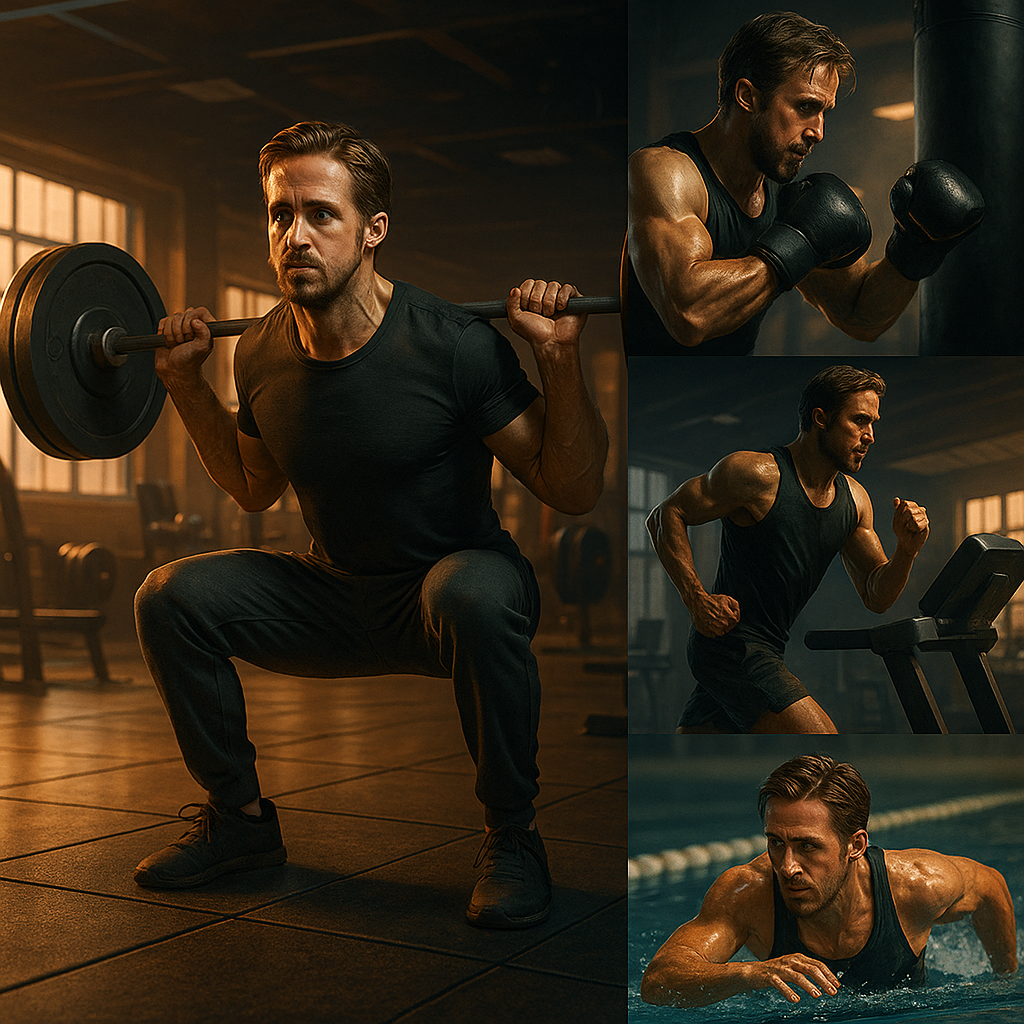
Weight Training and Functional Strength
For roles requiring power and presence, Gosling commits to 12–16 weeks of progressive overload training. His workouts combine:
- Compound lifts (squats, deadlifts, pull-ups) for functional strength
- Split routines (upper/lower focus) to build balanced muscle
- Time under tension training to maximize muscle fiber recruitment
He shifts between hypertrophy (8–12 reps) and raw strength phases (4–6 reps) depending on the role.
Cardio Conditioning for Stamina
On-screen combat is unpredictable, so Gosling trains his heart to handle stop-start intensity:
- Steady-state runs (30–45 minutes) for baseline endurance
- HIIT sprints (30s sprint, 90s recovery, repeated 15–20 times) to mimic fight demands
- Boxing rounds for conditioning + fight coordination
- Swimming for low-impact recovery and lung capacity
Body Composition Changes
Gosling adapts his physique to the character:
- Lean looks (Drive) → caloric deficit + high protein maintenance
- Bulkier roles (Blade Runner 2049) → caloric surplus + heavy lifting
- Shirtless scenes → short-term water/sodium manipulation for definition
These transformations unfold gradually over 3–4 months to maintain health and performance.
Recovery & Injury Prevention
Recovery is treated as seriously as training:
- Sleep optimization (8–9 hours nightly, blackout environment)
- Active recovery (yoga, light swimming, mobility work)
- Therapies (massage, foam rolling, cold/heat contrast sessions)
- Physiotherapy check-ins to correct imbalances early
Combat Training and Stunt Preparation
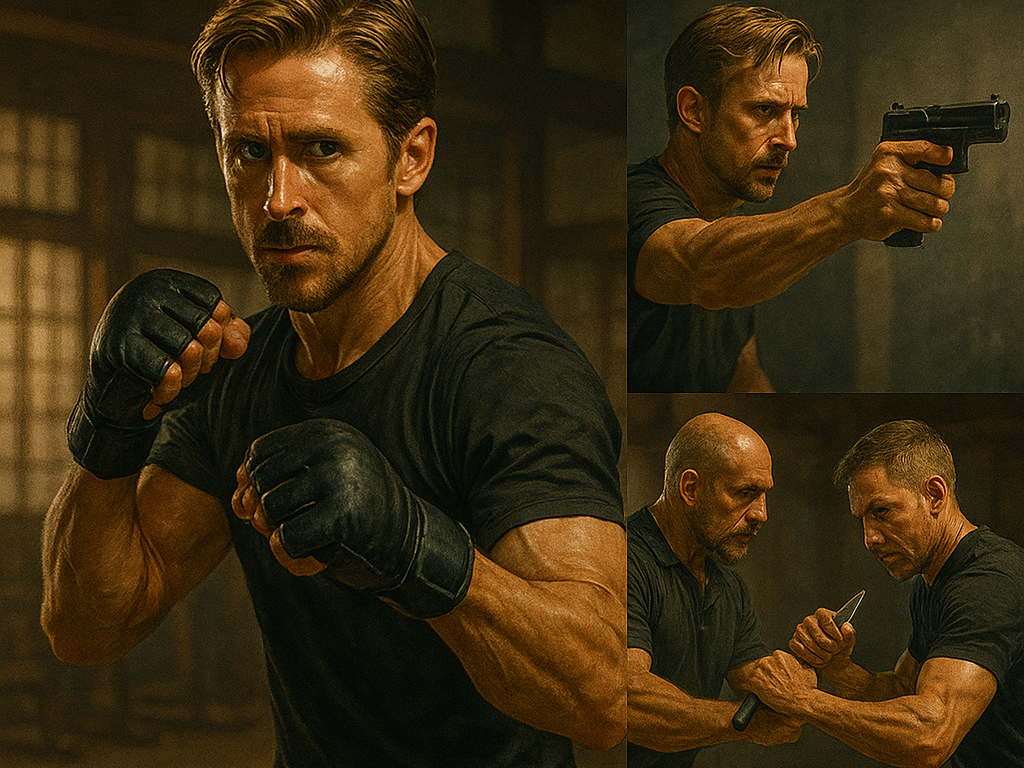
Hand-to-Hand Combat
Gosling doesn’t just learn choreography he masters martial arts foundations (boxing, Krav Maga, tactical systems). By drilling movements thousands of times, he ensures his fights look instinctive, not staged. He studies real combat footage and adapts fighting styles to his character’s backstory.
Weapons Handling
Safety and realism guide his firearms and blade training:
- Firearm stance, grip, and malfunction protocols
- Shooting range accuracy drills
- Blade training with sword/knife specialists
- Seamless switching between live and prop weapons
Wire Work & Acrobatic Sequences
To handle aerial stunts, Gosling trains in:
- Core and balance conditioning
- Harness familiarity and landing techniques
- Parkour and gymnastics for fluid, dynamic movement
Trust with stunt teams is key rehearsals build confidence before filming high-stakes scenes.
Mental Preparation and Character Development
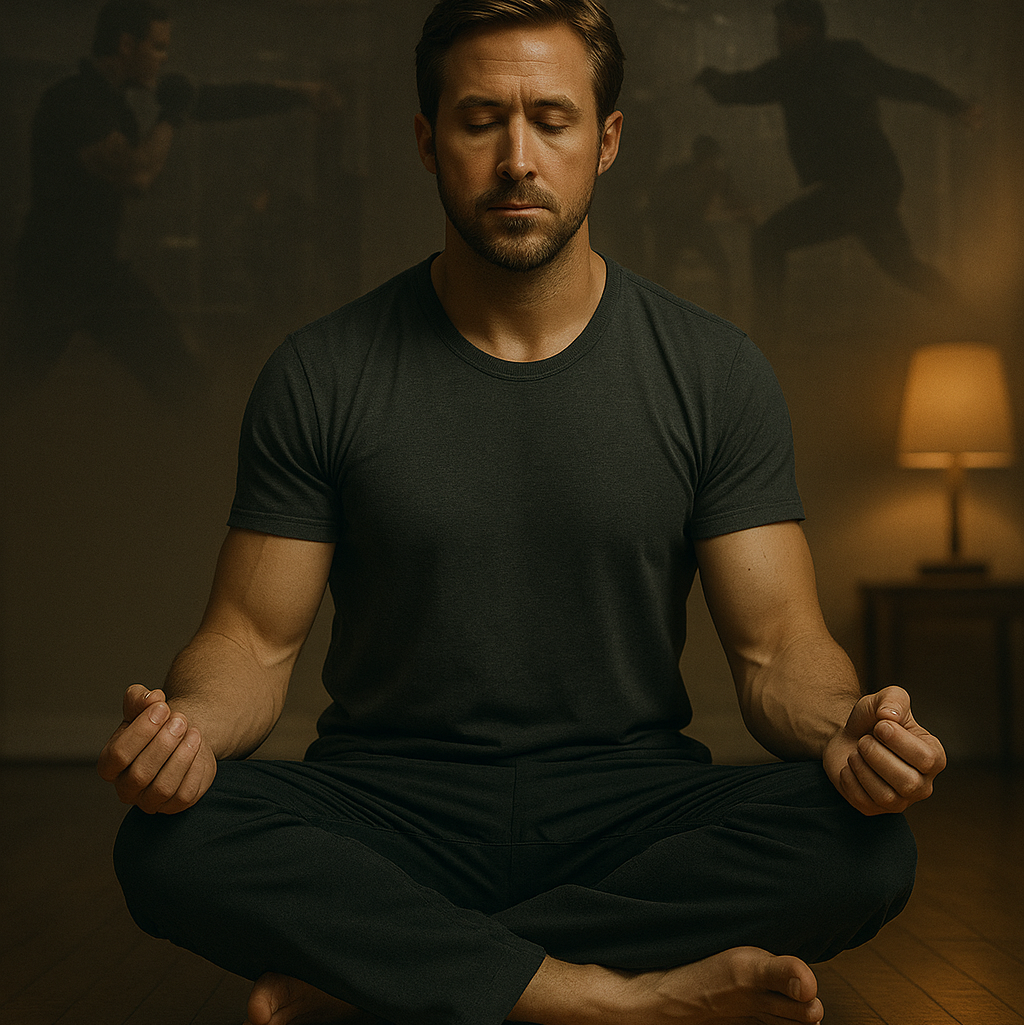
Method Acting Depth
Gosling builds detailed backstories and psychological frameworks, often using Stanislavski techniques. His characters’ emotional responses to violence and fear shape how he moves in action sequences.
Sports Psychology Tools
- Visualization: mentally rehearsing fight scenes before performing them
- Breathing & meditation: staying calm during chaotic filming
- Stress management: resetting with progressive muscle relaxation between takes
Confidence in Risky Scenes
Confidence comes from preparation. Gosling studies every safety measure, then commits fully on set. Positive self-talk and visualization ensure composure in high-pressure moments.
Nutrition and Diet Protocols
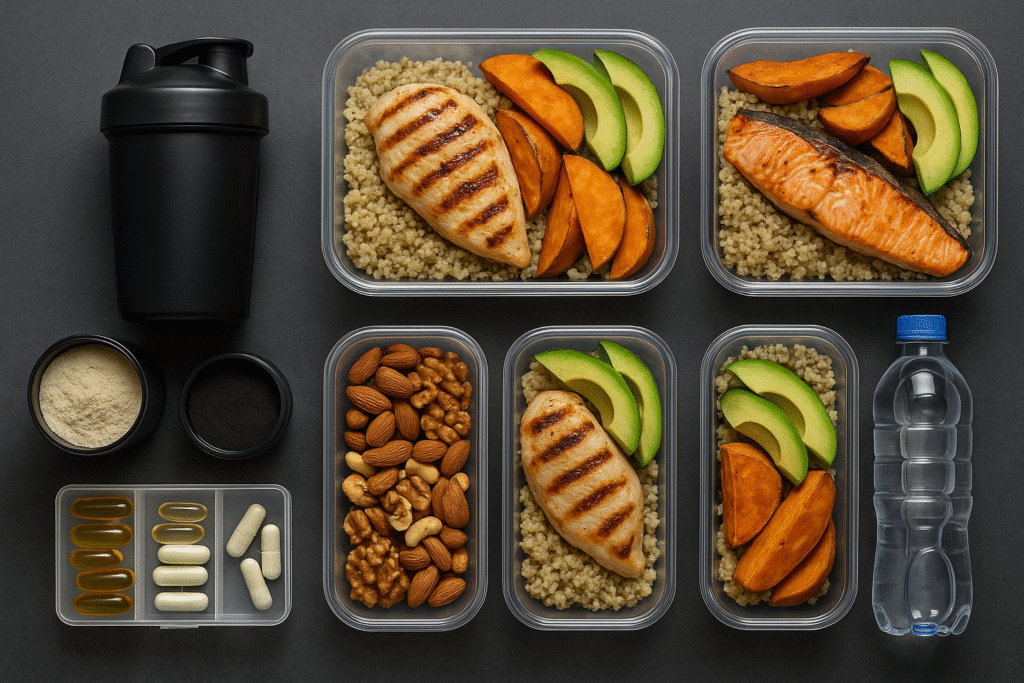
Meal Planning
5–6 meals per day balance performance and recovery:
- Proteins: chicken, fish, plant-based options
- Carbs: oats, quinoa, sweet potatoes
- Fats: avocados, nuts, olive oil
| Meal Type | Timing | Key Components |
| Pre-workout | 1–2 hrs before | Banana, oats, lean protein |
| Post-workout | Within 30 min | Protein shake, fruit |
| Regular meals | Every 3–4 hrs | Balanced macros |
Supplements
- Baseline: multivitamin, omega-3s, vitamin D3
- Performance: BCAAs, creatine, whey protein
- Optional: beta-alanine, ashwagandha, magnesium for recovery and stress
Hydration
- Morning reset: 16–20 oz water immediately after waking
- Sipping fluids throughout the day (not chugging)
- Electrolytes from coconut water/sports drinks during heavy sequences
- Cold drinks for cooling during stunt work
Working with Professional Training Teams
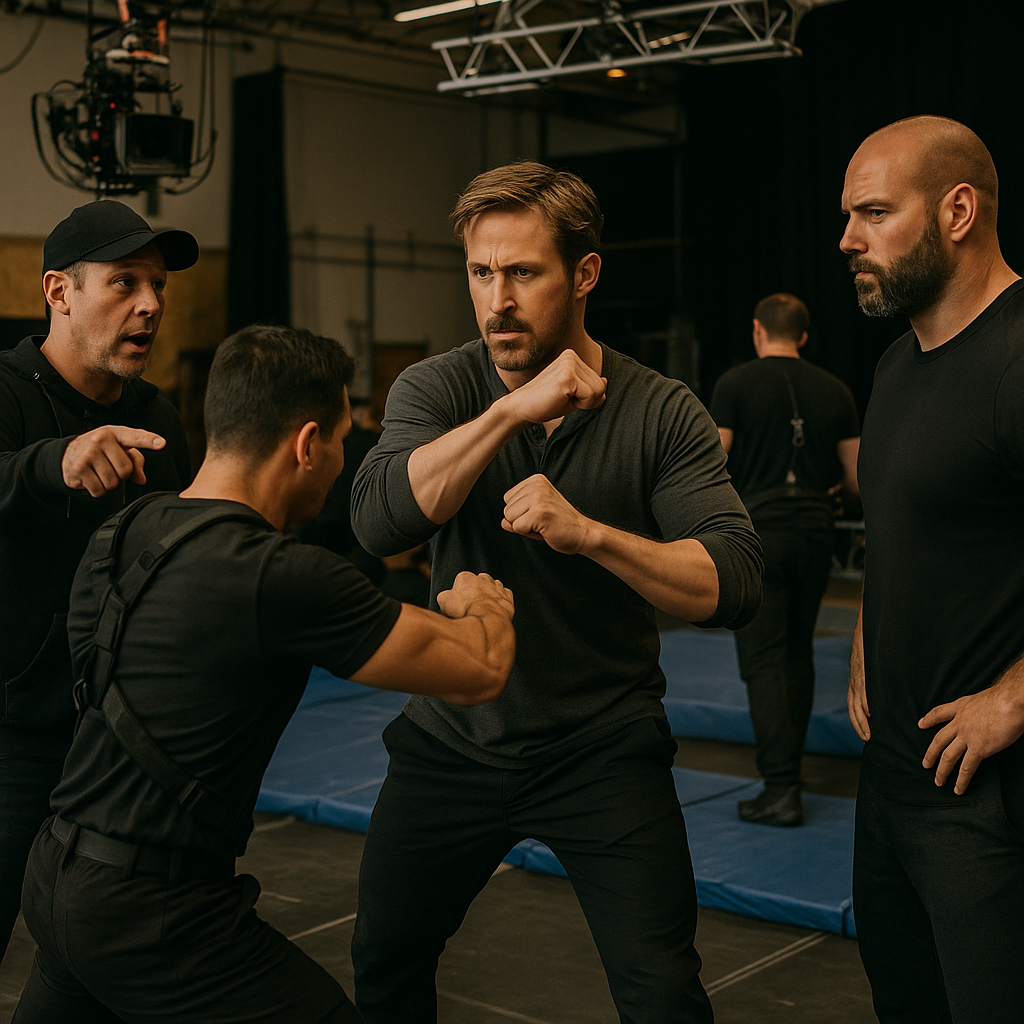
Stunt Coordinators
Months of rehearsal with coordinators like Tom Struthers help Gosling build character-driven fighting styles. Techniques include selling impact safely, precision falls, and authentic fight pacing.
Specialized Trainers
- Strength coach → power & endurance
- Flexibility specialist → injury prevention
- Martial arts instructor → authentic fight skills
Each role dictates a customized focus.
Medical Oversight
- Weekly sports medicine check-ins
- Physiotherapy 2–3x per week
- Daily massage during peak training
- Ongoing nutritionist adjustments
Learning from Veterans
Gosling trains alongside seasoned stunt performers, absorbing practical knowledge about pacing, longevity, and on-set safety.
Conclusion
Ryan Gosling’s preparation proves that action stardom isn’t about vanity muscles it’s about total immersion. He trains like an athlete, thinks like a performer, and surrounds himself with experts to ensure authenticity and safety.
His secret isn’t just grinding in the gym it’s balancing physical transformation with emotional depth, creating action heroes who feel as real as they look.
For anyone inspired by his process: start with functional training, focus on recovery as much as work, and remember that mindset is just as crucial as muscle.
FAQS
How does Ryan Gosling physically prepare for action films?
He commits to 12–16 weeks of structured training that blends weightlifting, functional strength, cardio, and combat-specific conditioning tailored to the demands of each role.
What type of workouts does he do?
His workouts include:
Phases of hypertrophy (muscle growth) and raw strength depending on the role
Compound lifts like squats, deadlifts, and pull-ups
Split routines to build balanced muscle
Time-under-tension training to maximize muscle recruitment
How does he build stamina for long action sequences?
Gosling trains with a mix of steady-state cardio, HIIT sprints, boxing rounds, and swimming. This develops endurance for stop-start fight demands and recovery between takes.
How does he prevent injury?
He prioritizes recovery with 8–9 hours of sleep, yoga, mobility drills, massage, physiotherapy, and contrast therapies (ice/heat). Active recovery is as important as training
Does Ryan Gosling perform his own stunts?
Largely yes. He prepares with parkour, gymnastics, wire work, and acrobatic drills. Close collaboration with stunt teams ensures safety while keeping action authentic.
